
September’s feature flower is the versatile Celosia.
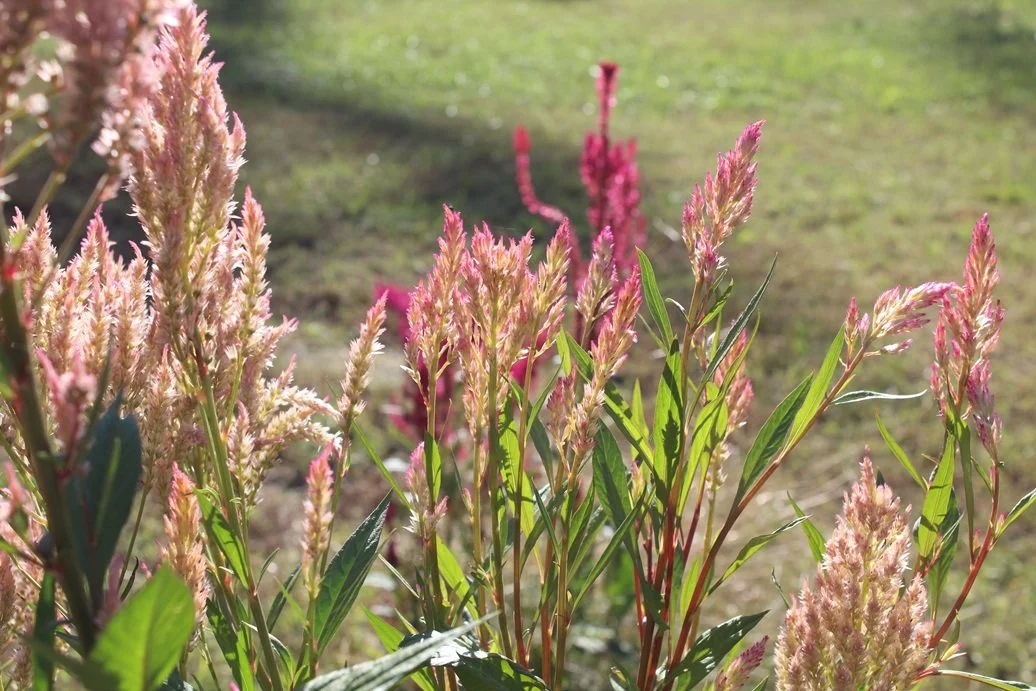
Celosia plumosa “Shimmer”
Celosia is a hardworking cut flower with their wide range of shapes and colors. Shapes include crested fans, pampas-like plumes, feathery spikes and wild cockscomb swirled brains. The flowers add color, texture and directionality to arrangements. All variations of celosia flowers last a long time in the vase and dry easily. Bolder, brighter varieties retain the most color. Even better, celosia loves Virginia’s humid heat – growing easily, vigorously and with abundance. Celosia doesn’t need early seed starting, their seeds can be direct sown with ease. Once the temperature outside (and in the soil) consistently reaches 60 degrees Fahrenheit or 16 degrees Celsius, it’s time to fling seed with abandon. They’ll grow almost any place you start them. Just be aware that they don’t like to be covered under a deep layer of soil as the seeds are super tiny.
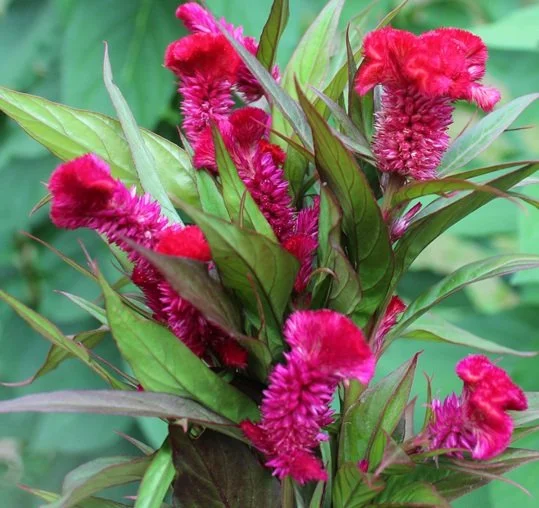
Pink fan type Celosia
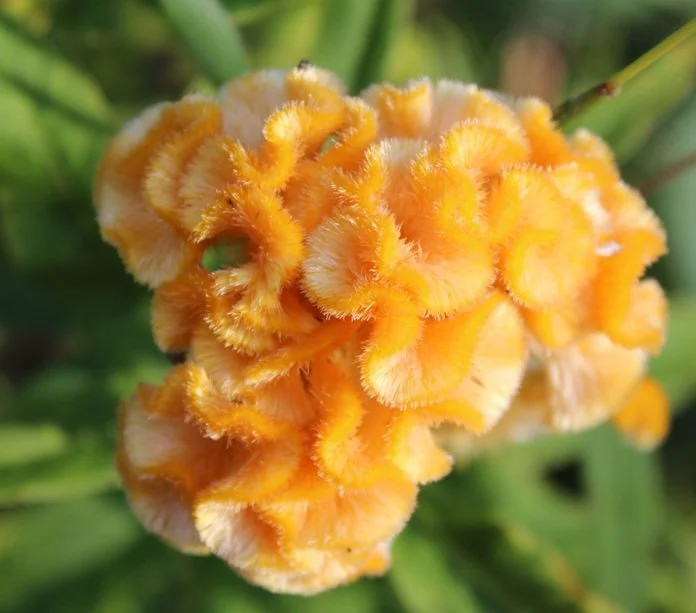
Celosia cristata “Chief Gold”
If you are growing flowers for arrangements, it is best to pinch (snip off the growing tip) them when they reach 8 inches. Remove about half the height at a leaf node. Leaving them un-pinched will give you monster plants!
Monster plants are still okay, because celosia is also edible and used as a warm-weather spinach substitute, as is amaranth, in many places. Pinch the new leaves as the older ones may be bitter. Treat it like cut-and-come-again plants.
Of all the world’s vegetable crops celosia is definitely the prettiest. Deriving from the Greek word ‘kelos,’ meaning burned; the name refers to the plant’s striking flame-like flowers. It is a common edible in Africa where it is native. The fresh young leaves, young stems and young flower spikes are used to produce a tasty and nutritious “soup” that is a daily fare in West Africa, particularly Southern Nigeria. Celosia is also served as a nutty-flavored side dish with meat or fish or more commonly with a cereal-based main course such as maize porridge. Its nutritional value is similar to other leafy vegetables with some variation depending on species/cultivar, soil fertility (more fertilizer means higher content of minerals, provitamin A, vitamin C), harvest stage, and moisture content.
Once the leaves are boiled, the water may turn unappetizing colors, yet the leaves retain their green color, which is apparent when the water is drained away. This cooking water should be discarded because it likely contains dissolved nitrates and oxalates.[1]
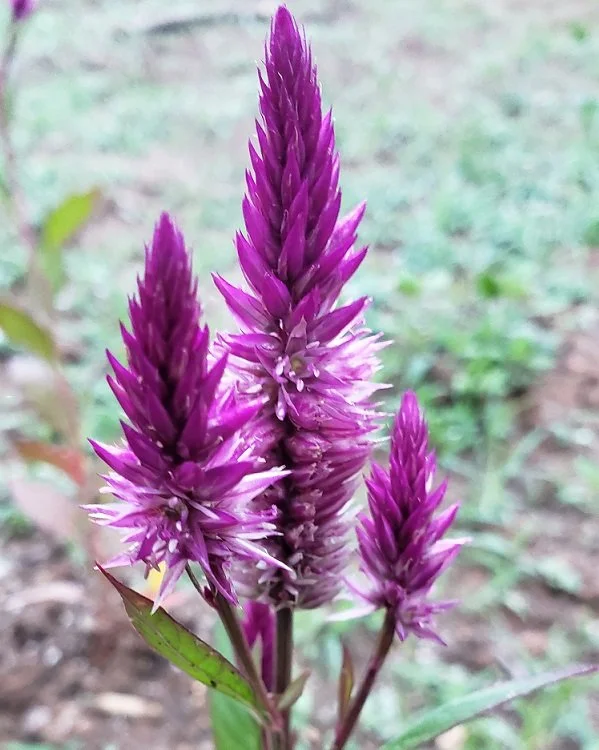
Celosia spicata “Ruby Parfait”
Seed collecting is easy too. You’ll see the little black seeds looking like bugs on the flowers. Shake the flower head over a piece of light paper and it will quickly be covered in tiny black specks. Save them in a paper envelope and plant the next year.
If you like lovely colorful flowers in a variety of shapes and sizes, long lasting dried flowers, and spinach, give celosia some space in your garden!
[1] National Academies of Sciences, Engineering, and Medicine. 2006. Lost Crops of Africa: Volume II: Vegetables. Washington, DC: The National Academies Press. https://doi.org/10.17226/11763