Elderberry Season
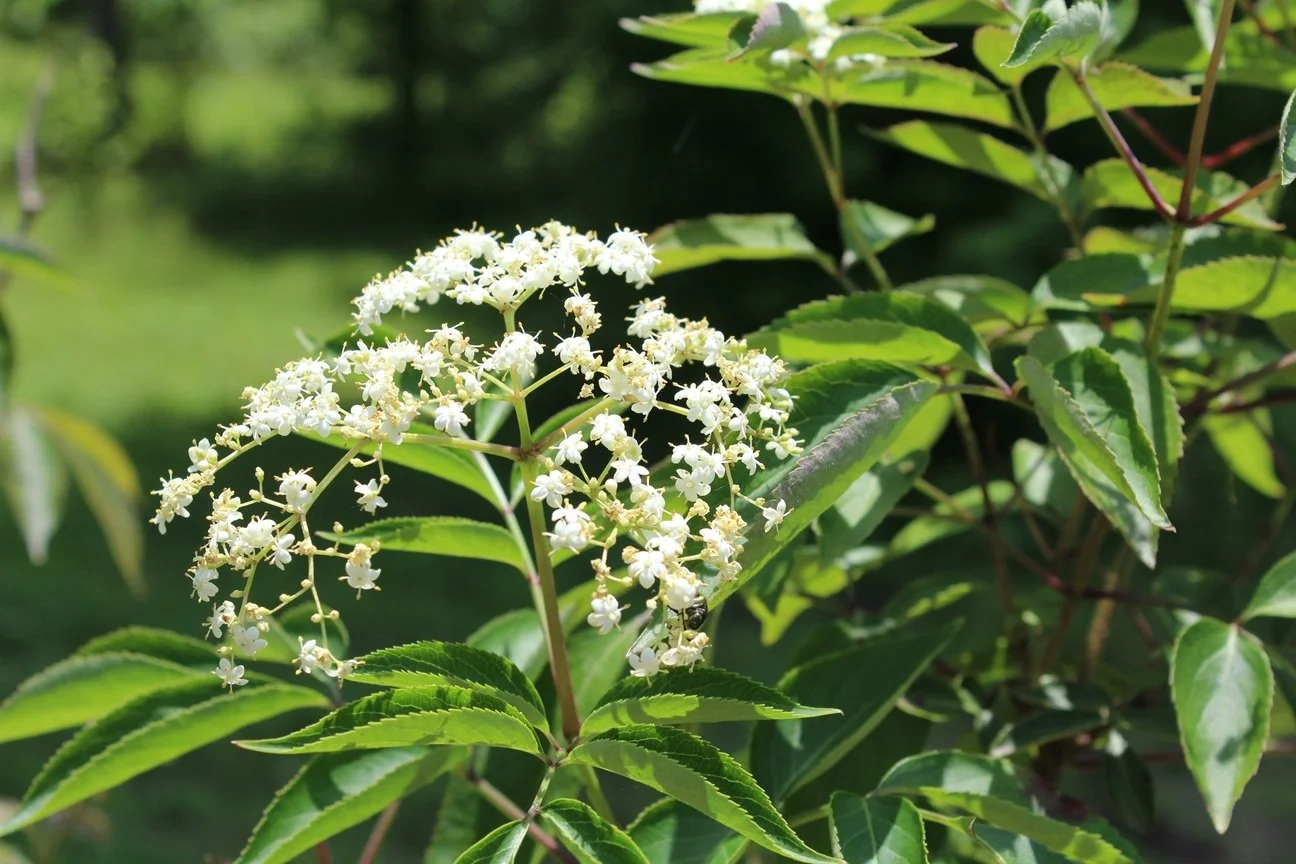
You’ve probably seen low growing shrub trees covered in white flower clusters along the edge of the road or in farm fields at this time of year. This unassuming little tree carries a powerful punch in its flowers and black berries. Recently re-classified as a member of the Viburnum family, Elderberry (Sambucus nigra) is native to most of North America, including Virginia. Deer are not supposed to like it, but our one lonely little tree has been buck rubbed and the new growth nibbled every year. This year we are building a cage around it for protection.
And it is a tree worth protecting. Both its flowers and berries have historically been used for their healthful benefits. Elder flowers have been infused into ales, cordials, vinegars, and steeped into a tea with water. They have also been infused into skin safe oils to create soothing salves. Elder berries have been used to make preserves, wines, cordials, and for adding flavor and color to other wines. The berries can be used dry or fresh and should always be ripe and fully cooked to prevent the possibility of stomach upset. DO NOT INGEST OR USE THE BARK, WOOD, LEAVES OR ROOTS AS THEY ARE TOXIC.
As always, when foraging wild plants, be certain of your plant ID. If in doubt, grow your own. Elderberry seedlings are available at many local plant nurseries and online shops.
Here are a few recipes to try:
Elder Flower Salve
Soothing and moisturizing benefits for dry or mature skin.
Step 1 – prepare an elder flower infused oil.
Gather elder flowers in a basket from a clean source such as your garden. Note that roadside plants may have been sprayed with herbicides. No need wash or rinse the flowers before setting them out to dry, or use a dehydrator. It is very important to use bone dry herbs when making infusions for salves. Any moisture, including water, can cause the final product to mold.
Fill a clean glass jar (with lid) with four ounces of elder flowers and pour your favorite oil over them until the jar is almost filled. (Any skin safe oil such as sweet almond, apricot kernel, olive, grapeseed, jojoba, or sunflower can be used.) Cap the jar of dried elder flowers and oil and tuck away in a cabinet for around 4 to 6 weeks, shaking occasionally as you remember to. Strain when done.
Step 2 – assemble your ingredients
3 oz (85 g) elderflower infused oil
0.5 oz (14 g) rosehip seed oil (optional)
0.5 oz (14 g) beeswax
Step 3 – time to cook
Combine the elderflower infused oil and beeswax in a heatproof container, like a canning jar. Place the container into a pan filled with a few inches of water, or use a double boiler dedicated to making salves.
Place the pan over low heat and stir with skewer or chopstick until the beeswax melts. Remove from heat and stir in the rosehip seed oil. To add a little extra natural preservative power, prick a Vitamin E capsule with a clean pin and squeeze the contents into the salve. Stir well. As the oil begins to cool, but before it solidifies, you can also add a few drops of essential oil, such as lavender or rose, if you’d like your salve to be scented.
Pour the liquid oil into round tins and allow to cool before screwing the lids on. I prefer to use 2 ounce tins instead of a canning jar as it seems to stay fresher longer in separate containers.
Apply a thin light layer to dry skin at night.
* Tins, oils and beeswax can be found on Amazon and through Brambleberry.com, an online soap makers supply shop.
Elderberry Jam
4 c berries
3 c sugar
1 oz pectin or 1 to 2 apples cored and cubed for natural pectin
Crush a few of the berries and cook over low heat until berries begin to produce some juice. Add sugar. If the berries are very tart, add 1 cup sugar to each cup berries. Stir and simmer over low heat until the sugar is dissolved. Mash the apples (if used) or add the pectin now. Continue to simmer, stirring frequently to prevent sticking, until a small amount of jam dropped onto a clean plate will stay in place. Pack while hot into hot sterilized jars leaving ¼ inch headspace and water bath process.
For 4 oz jars process 10 minutes, for 8 oz to 10 oz jars 15 minutes.
Use within one year.
Elderberry Base Syrup
For cold & flu season immune system support.
2 cups dried or 4 cups fresh elderberries
4 cups water
1 cup natural liquid sweetener – honey, maple syrup, agave
1 cup vodka or brandy (optional – helps to preserve shelf life – can double the sweetener for similar effect)
Bring berries and cinnamon (and ginger) to a boil in the water; reduce heat and simmer 30 to 40 minutes. Remove from heat and steep for an hour. When comfortable to handle, strain liquid out in cheesecloth – discard used berries and spices in compost. Once liquid reaches room temperature, add sweetener* and optional alcohol and stir until combined. Bottle in sterile jars and refrigerate.
*ratio volume of sweetener should be at least half of the total volume of final liquid measure.
For additional flavorings and medicinal benefits try adding 1 cinnamon stick, dried ginger (2-3 tsp dried root or 1-2 tsp ginger powder), a vanilla bean, star anise, allspice, or any other favorite herb or spice.
If you don’t want to make your own syrup but do want the immune support benefits of elderberry, commercial preparations such as Sambucol can be found at pharmacies like CVS and Walgreens. Note that Elderberry can act as a diuretic, so as always before using herbal preparations, check for drug interactions and consult your pharmacist or physician before use if you have chronic illness, are pregnant or nursing.